
Update: Navigating a Subdued Commercial Property Market
Sep , 28

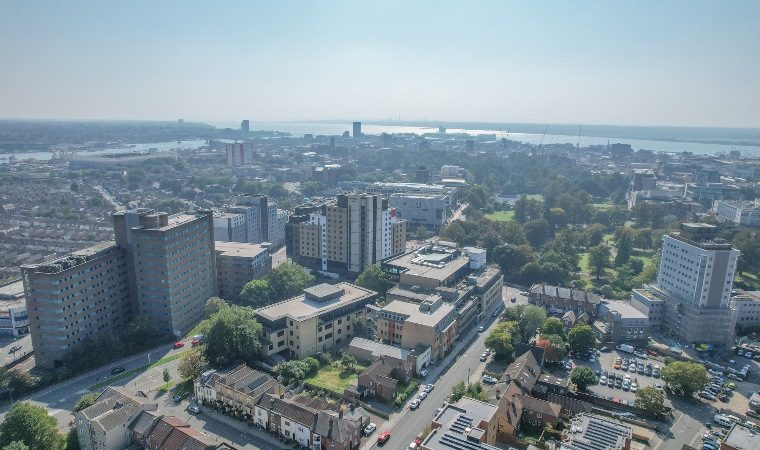
The year began with a genuine sense of optimism. Pricing had stabilised, sentiment was improving and there was a reasonable expectation that transactional activity would build steadily through 2026. That optimism did not survive events in the Middle East. Since the conflict began, the market has become noticeably subdued, and the long hot summer did little to encourage activity, leaving recent months quieter still.
Deal flow has been the clearest indicator of this malaise. Not many transactions are closing and what is coming across our desk is generally falling into one of two categories: assets that are priced without regard for current conditions, or stock that fails to meet the quality threshold that our investors rightly expect.
Neither represents an opportunity worth pursuing, and we have no intention of lowering our standards simply to maintain a level of transactional activity. Discipline in a quiet market is as important as it is in a busy one – if not more so. Pressure to secure a transaction should never outweigh determination to do the right deal. That is not to say we are complacent – we remain very much on the lookout for the right opportunity, and the returns must stand up without relying on the market to improve.
It is fair to ask whether the current climate of political and geopolitical uncertainty is a temporary phase or simply the operating environment we should now expect. Our view is that investors and vendors alike need to become comfortable with a degree of permanent uncertainty, rather than waiting for it to resolve. This has direct implications for pricing.
For the market to become genuinely attractive to buyers again, further price softening is required – though not uniformly across all sectors. The core issue is one of risk premium. Commercial property needs to offer a meaningfully enhanced return profile to bonds and gilts to justify the additional risk, illiquidity and the management involved in holding it. At present, that differential is too narrow in several sectors. Until pricing adjusts to reflect this, buyers will remain understandably reluctant.
We see little prospect of green shoots or renewed price growth in the near term but a gradual drift down in some sectors. This is not a pessimistic view so much as a realistic one, and it is the backdrop against which we are assessing every opportunity that comes forward.
We are seeing early signs of tenant difficulty across parts of the market. For the most part, this is not translating into outright default but tenants are increasingly looking to reduce overheads and rationalise their portfolios. For investors, this reinforces a point we have made consistently: income and covenant strength are the primary drivers of value in the current market – and both deserve far closer scrutiny than headline yield.
There has been a marked shortage of distress sales. Historically, this kind of activity has helped to keep a difficult market moving, providing entry points for well-capitalised buyers. In one sense, its absence is a healthy sign; it reflects resilience rather than crisis. But in another sense, it compounds the lack of opportunity available to disciplined investors like us.
Private investors appear to be scarce at present, quite possibly diverting capital towards other asset classes in search of better relative returns or possibly just sitting on their hands. Those buyers who remain active have become notably selective. Any perceived weakness in an asset, however minor, is now enough to see a prospective purchaser walk away. This is a market for choosier buyers – and rightly so.
Industrial property continues to feel overpriced. There is insufficient yield differentiation from bonds and gilts to properly reflect the risk being taken on and – unless an asset is clearly under-rented – the case for further rental growth is difficult to make. Some tenants are under strain, availability is increasing, and capital expenditure remains a significant and unavoidable cost. But rents seem to be holding firm. In our assessment, yields in this sector need to soften further before buying becomes genuinely worthwhile.
The office market remains under considerable pressure, driven partly by the wider economic and geopolitical backdrop but increasingly by uncertainty around how AI will reshape occupiers’ space requirements. The practical effect has been a tendency for companies to stay put and defer decisions rather than commit to new terms.
When occupiers do move, it is typically a right-sizing exercise (generally downsizing), rather than a wholesale exit from office space. Rent is less critical for the right space. The investment market for offices remains out of favour; this is creating some interesting entry points, though it is certainly not the moment to be a seller as pricing is already reflecting the hurdles of the sector.
Retail is showing signs of stabilisation, and we are seeing some reasonable city centre opportunities, predominantly income-led at sensible yields. However, there is little evidence of value-add potential or meaningful growth within this sector at present, so much of what we are seeing does not align with Craigard’s investment model.
Risk/Reward Opportunity: This is probably where we may see realistic value: very short income plays on assets with substandard building fabric but decent fundamentals. We have seen one or two situations where sellers have no appetite for the capex and grief ahead and just want out. There will be no bank debt on such situations so the return needs to be quite attractive.
So what does this all mean for existing syndicates? The likelihood is that we are tied in until lease events deliver rental growth, which in turn drives capital value. Being on our game with asset management remains so important. Exit timing against remaining lease length becomes a delicate balance. But rest assured, we are just as keen to recycle capital as all of you – so we are routinely reviewing options and market testing with the agents. The good news is that with only a few noticeable exceptions, most of our mature holdings are well placed for income and rental growth and at a reasonably defensive holding cost.
None of these issues changes our underlying philosophy. We remain committed to:
In a market defined by caution, that discipline becomes more valuable – not less.
We are not chasing activity for its own sake. We are waiting, as we always have, for the right assets at the right price, and we will continue to update you as conditions evolve.